马上注册,阅读更多内容,享用更多功能!
您需要 登录 才可以下载或查看,没有账号?立即注册 
×
MoDCs in Tumor-Draining Lymph Node as good Predictors of Immunotherapy in non-small cell lung cancer
单核细胞来源的树突状细胞(monocyte-derived dendritic cells, mo-DCs)
Objective: Tumor-draining lymph nodes (TDLN) are essential sites for educating antigen-specific T-cells. Monocyte-derived dendritic cells (moDCs), generated via inflammation in local tissue, have been shown to promote CD8⁺T-cell activation in TDLN. Based on the basic principles of immunology, we hypothesized that higher abundance of moDC in TDLN reflects enhanced activation of tumor antigen-reactive CD8+T-cells and improves efficacy of immune checkpoint inhibitor (ICI) therapy. To prove this, we combined mechanistic mouse experiments with retrospective human analysis to clarify the immunologic and clinical relevance of moDC in TDLN.
Methods: Tumor-bearing mice were intratumorally treated with cGAMP, an agonist of the stimulator of interferon genes to induce inflammation in the local tumor site. The proportions of some immune cells in TDLN were addressed by flow cytometry analysis. In the adoptive transfer analysis, Ly6C+monocytes derived from CD45.1⁺ wild-type mice were intravenously transferred into tumor-bearing IFNAR1-knockout mice. In the translational validation assay using clinical samples, we analyzed 36 patients with resected non-small cell lung cancer (NSCLC) who received ICI after the cancer recurred. Multiplex fluorescent immunohistochemistry for FCN1, S100A8, and CD14 were performed to identify moDCs (FCN1⁺S100A8⁺CD14⁻) in TDLN. The primary tumor tissue was classified as "Hot" or "Cold" based on markers including CD8α, CD40, MX1, pSTAT-1, and CD163 staining. Survival outcomes were compared by moDC density, PD-L1 status, and tumor classification.
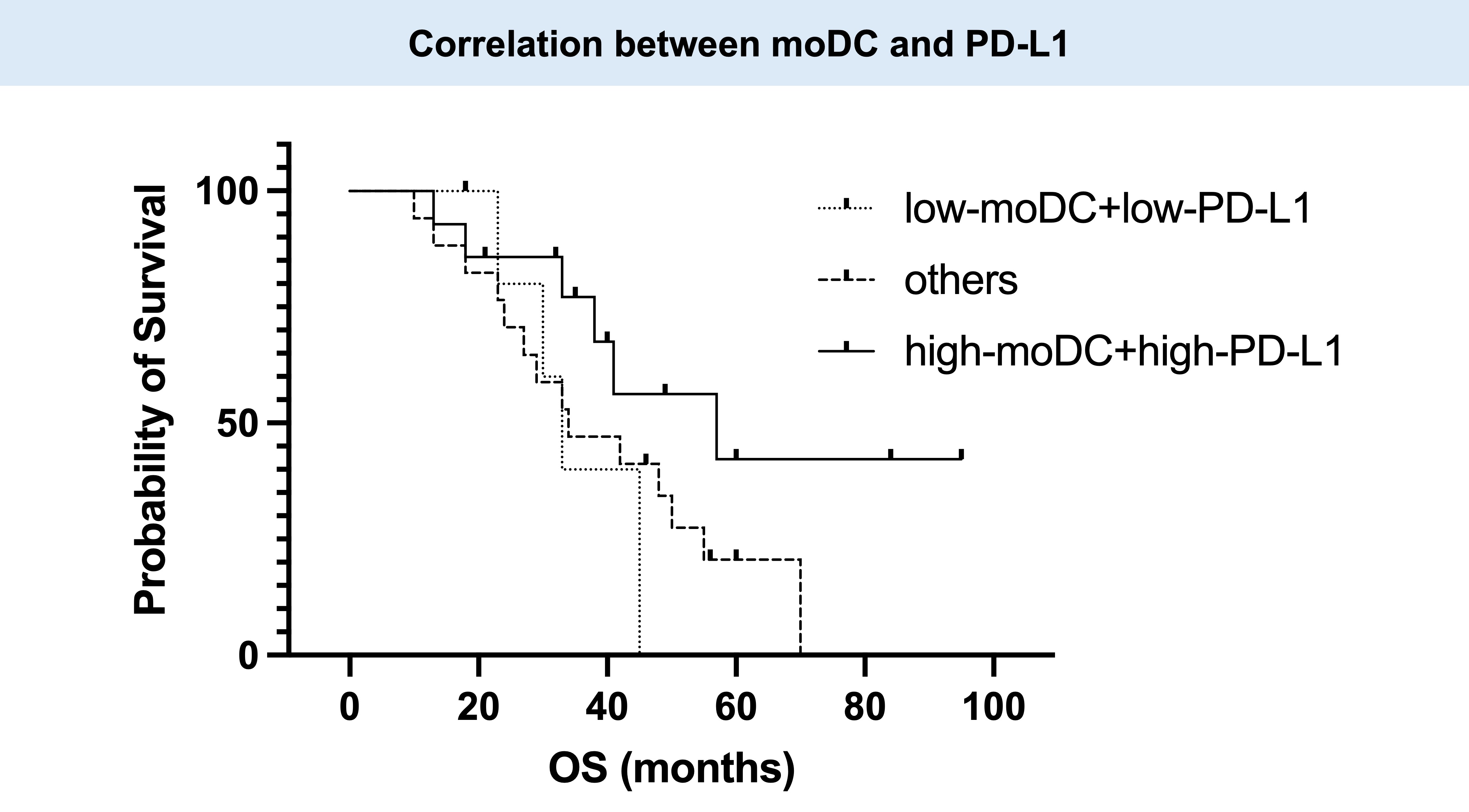
Results: In the mouse tumor model, cGAMP-induced tumor inflammation significantly increased moDCs in TDLN and enhanced CD8⁺T-cell activation. In the clinical samples (median age = 69; stage Ⅱ/Ⅲ/Ⅳ = 25/10/1), the PD-L1high/moDCshigh subgroup achieved superior overall survival (OS) vs all other strata combined (p=0.04). Consistently, the Hot/moDChigh group showed the best survival trend (p=0.18). Moreover, in the moDChigh group, the patients who did not receive postoperative adjuvant therapy showed longer OS (p = 0.06).
Conclusions: Our current study suggests that the presence of moDCs in TDLN is a key factor of sensitivity to ICI therapy. Quantitative evaluation of moDCs in TDLN, therefore, has potential to predict the efficacy of ICI and survival outcomes in patients with recurrent NSCLC, unveiling a novel lymph node–centric immunological framework to guide patient stratification.
Ryusei Yoshino (1), Takayuki Ohkuri (2), Akemi Kosaka (2), Toshihiro Nagato (2), Nanami Ujiie (1), Takahiro Inoue (2), Hiroyoshi Nozaki (2), Kengo Takahashi (1), Nozomi Hatanaka (1), Akane Ito (1), Shunsuke Yasuda (1), Hiroya Kobayashi (2), Masahiro Kitada (1), (1) Department of Thoracic Surgery and Breast Surgery, Asahikawa Medical University Hospital, Asahikawa, NA, (2) Department of Pathology, Asahikawa Medical University, Asahikawa, NA
|

